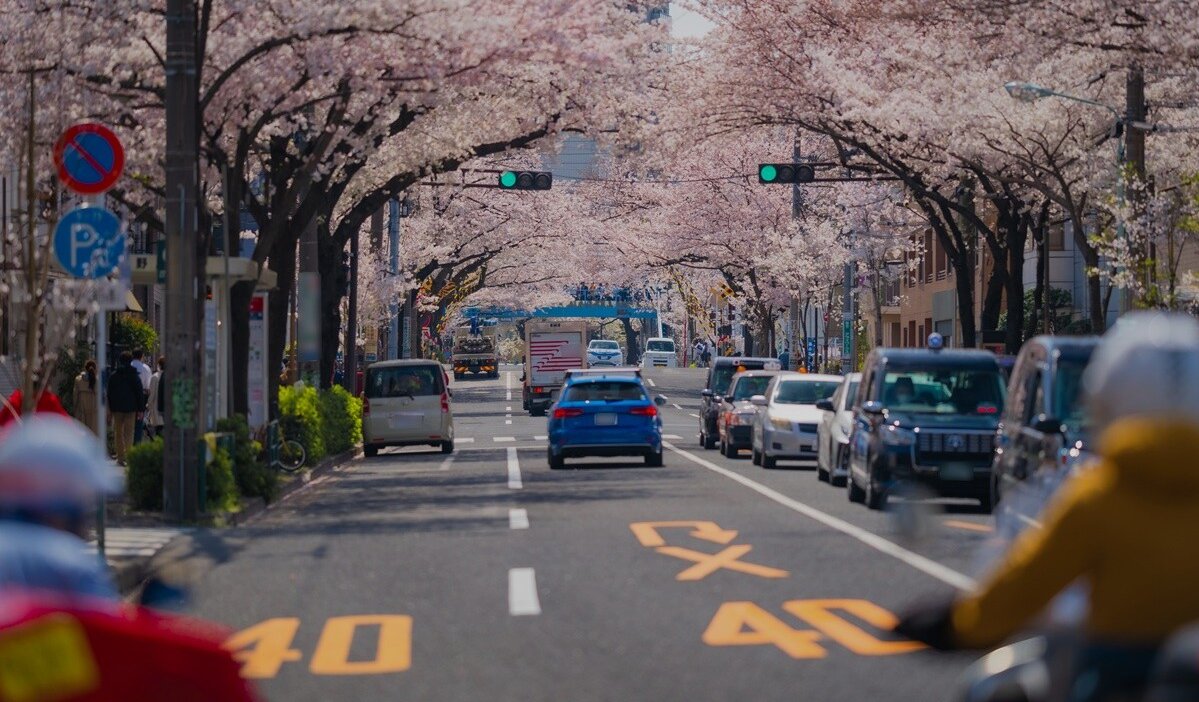
Driving in Japan
Are you planning to travel to Japan and want to rent a car there? Whether your aim is to explore rural Japan or discover the country’s ski resorts, having a car can be extremely useful outside the major cities. However, you may well be wondering whether you are allowed to drive in Japan with your EU driving licence and which rules apply. Learn more about driving in Japan in our article.
Japanese driving licence: driving in Japan as a tourist
First things first: are you allowed to drive in Japan with your EU driving licence? In short: no.
If you come from Germany or Switzerland, neither your national driving licence nor a standard international driving permit is sufficient for driving in Japan. In order to be permitted to drive a vehicle in Japan, you must have an officially certified Japanese translation of your driving licence. Please note: This translation is only valid when presented alongside your original driving licence.
Only the Japan Automobile Federation (JAF) has the authority to issue the necessary Japanese driving licence translation. The easiest way is to order your translation via the ADAC online shop before you travel, as the ADAC works in partnership with the JAF.
Driving and traffic rules in Japan
If you wish to drive in Japan, there are a few things you should bear in mind and it is essential that you are well informed in advance, as the traffic rules differ significantly in some respects. First and foremost: in Japan, traffic drives on the left.
Speed limits
The following speed limits apply on roads in Japan:
- Side streets: 30 km/h
- Main roads: 40 km/h
- Country roads: 50–60 km/h
- Motorways: 80–100 km/h
Zero-tolerance alcohol policy
It is recommended that you avoid drinking any alcohol whatsoever, as the legal blood alcohol concentration limit is just 0.03% and very heavy penalties apply for any offence. Passengers are also not permitted to travel with a person under the influence of alcohol. They face penalties just as severe as those imposed on the driver.
Level crossings
At level crossings, you must come to a complete stop, just as you would at a stop sign – even if it is obvious that no train is coming.
Toll roads
Many roads in Japan, and motorways in particular, are subject to tolls and can be expensive. We strongly advise you to book an ETC (Electronic Toll Collection) card when hiring a car. This ensures the barrier at the toll station opens automatically, and you can settle the bill conveniently with the car hire company at the end of your journey.
Road signs & traffic lights
When driving in Japan, it is worth looking up, as traffic lights are usually installed horizontally above the road. Road signs also differ from what you might be used to: the Japanese stop sign, for example, is not an octagon but an upside-down, solid red triangle. Be sure to familiarise yourself with the most important signs in advance.
Pedestrians
Pedestrians always have priority (even if, in practice, this is rarely observed by locals). Please note: pedestrian crossings without traffic lights are indicated in advance on the road by two white diamonds. Drivers should slow down here to allow pedestrians to cross the road at the pedestrian crossing.
Parking & Refuelling
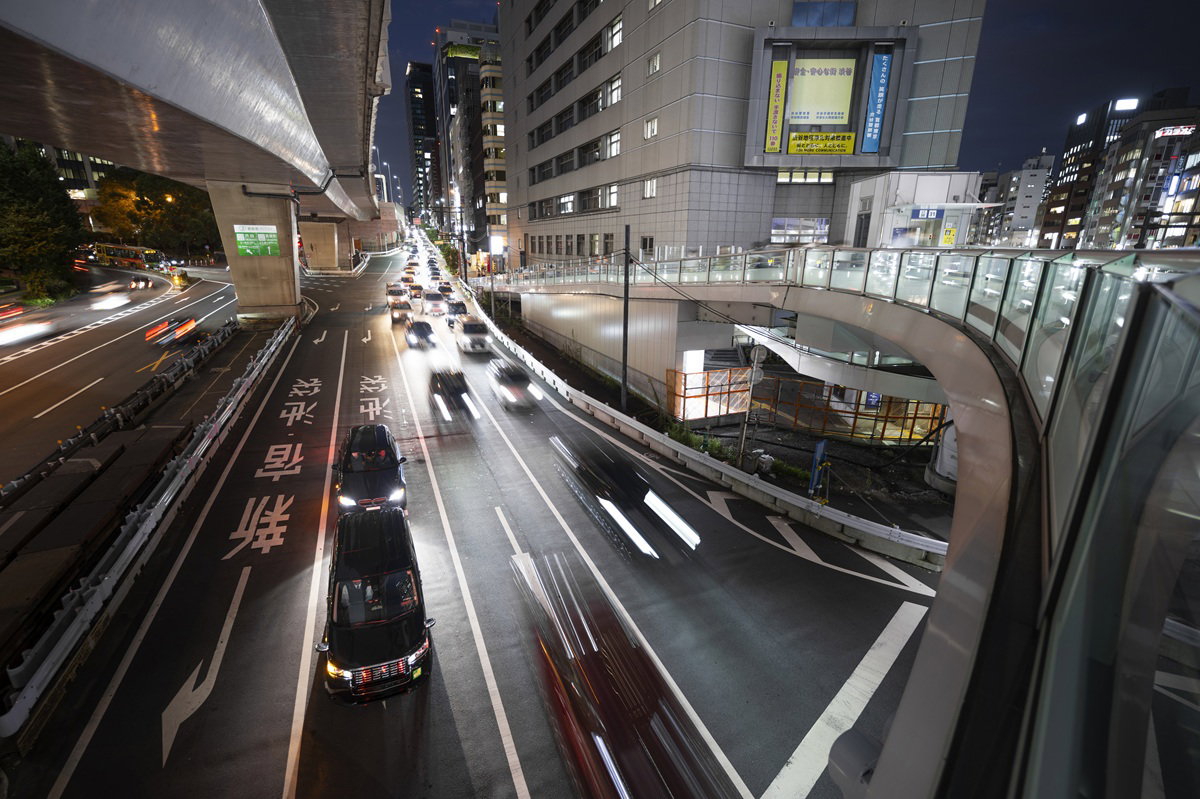
There are also a few differences between Japan and Europe when it comes to parking and refuelling. For instance, parking at the kerb is virtually taboo. Parking is almost exclusively in designated parking spaces, known as “coin parkings”. Vehicles are almost always parked in reverse, as this is safer when pulling out later. It is also important to carry cash, as these car parks can usually only be paid for with coins or very small banknotes.
Another distinctive feature is that these public car parks generally use a system with a metal flap that lifts up from beneath the vehicle. It only lowers once the parking fee has been paid. Please note: if you try to drive off without paying, this can cause serious damage to your vehicle.
As in Germany, you can refuel at self-service petrol stations. However, full-service petrol stations are just as common in Japan – and you may be familiar with them from other countries too. Here, the staff will refuel your car, clean the windows and take your rubbish. What you probably do not know yet is that they will also direct you out into the flow of traffic with deep bows.
Special considerations on Japan’s roads
There are, however, a few other things you should bear in mind when driving.
For example, on your first drive in Japan, bear in mind that the windscreen wipers and indicators are reversed, as the steering wheel is now on the right-hand side due to left-hand traffic. European tourists usually end up unintentionally wiping their windscreen at the first junction.
The ‘thank you hazard’: In Japan, when you give way to someone or merge into a lane, you say thank you by briefly flashing your hazard warning lights once or twice.
Want to enter an address into your sat-nav? Japanese addresses are extremely complex and often do not follow a street-name system. Car sat-navs are therefore almost always programmed using the destination’s telephone number or special “mapcodes”.
Tips
#1: Snow chains and winter tyres for the Japanese Alps
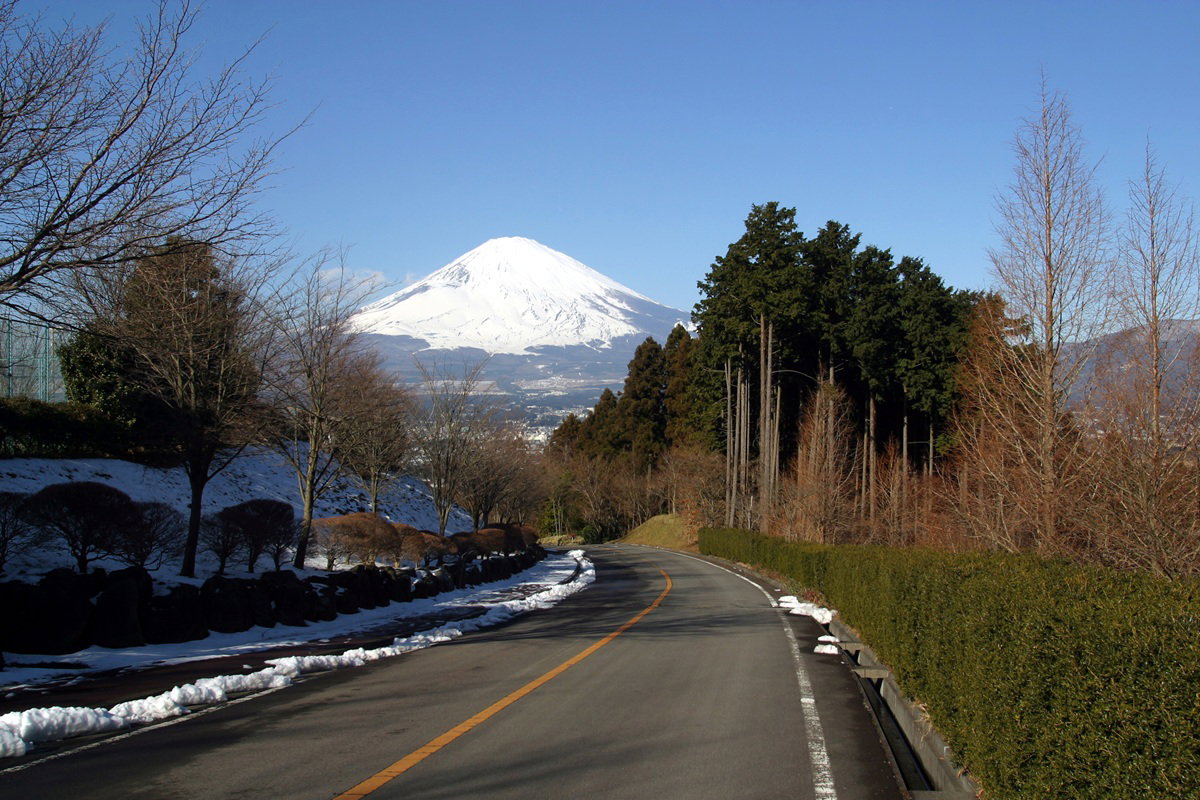
If you are planning a trip to the Japanese Alps – for example, from Tokyo – make absolutely sure that your vehicle is fit for winter driving. It rarely snows heavily in Tokyo, so cars hired there are not necessarily fitted with winter tyres or snow chains.
#2: Vehicle size
Cars in Japan are often rather small. You should therefore ensure that the car is large enough to carry all your luggage.
#3: Roads in Japan
Roads in Japan are often very narrow and winding. Make sure you are well prepared for this and, when hiring a car, choose a suitable vehicle class that you will feel comfortable driving.
Car breaks down or accident: What to do?
Always call the police (110) immediately if you have an accident. If your car simply breaks down, as an ADAC Premium member you can contact the ADAC directly for assistance.
FAQs: Driving in Japan
No. For travellers from Germany, Switzerland and some other countries, the international driving licence is not valid in Japan. You must have the official Japanese translation (JAF translation) of your national driving licence.
That depends entirely on your planned route. For major cities such as Tokyo, Kyoto or Osaka, a hire car is not recommended, as public transport (trains, Metro) is excellent, cheaper and less stressful. However, a hire car is extremely useful and often the only option if you wish to explore more rural regions, the Japanese Alps, the island of Hokkaido or Okinawa.
In order to collect a hire car in Japan, you must present the following to the car hire company: your valid national driving licence (e.g. a German one), a printed Japanese translation (JAF translation), your passport and a valid credit card issued in the name of the main driver.
Author
Katharina Weckend, Content & Communications Manager
Katharina joined lingoking as a Content and SEO Manager in 2024. She handles our content and SEO strategy and writes texts for our website, guide and other lingoking media. “I am happy I get to pass on knowledge in our lingoking guide and help break down language barriers.”

Translation
Dr. Tracey Kimmeskamp
A native of Northern Ireland, Tracey has lived in Germany’s Ruhrgebiet for over 20 years. She has been working with lingoking as a translator since 2016, all the while diligently training for her dream career in mochi quality control.